
Ligament Tension
Normal Anatomy
Taut, robust ligaments holding bones in correct alignment
Pathological / Affected Anatomy
Elongated, lax, or torn ligaments causing abnormal joint movement
Knee instability is a symptom that makes the joint feel unreliable. This page covers ligamentous laxity, muscle control, and treatment pathways.
Knee instability is a functional symptom characterized by the knee joint feeling unreliable, shifting abnormally under load, or giving way. It can stem from ligament laxity (e.g. ACL/MCL tear), muscle weakness, or kneecap tracking issues. Wording is cautious: rehabilitation is the key first step, and surgery is reserved for selected cases. Restoration of dynamic stability is the primary clinical goal.
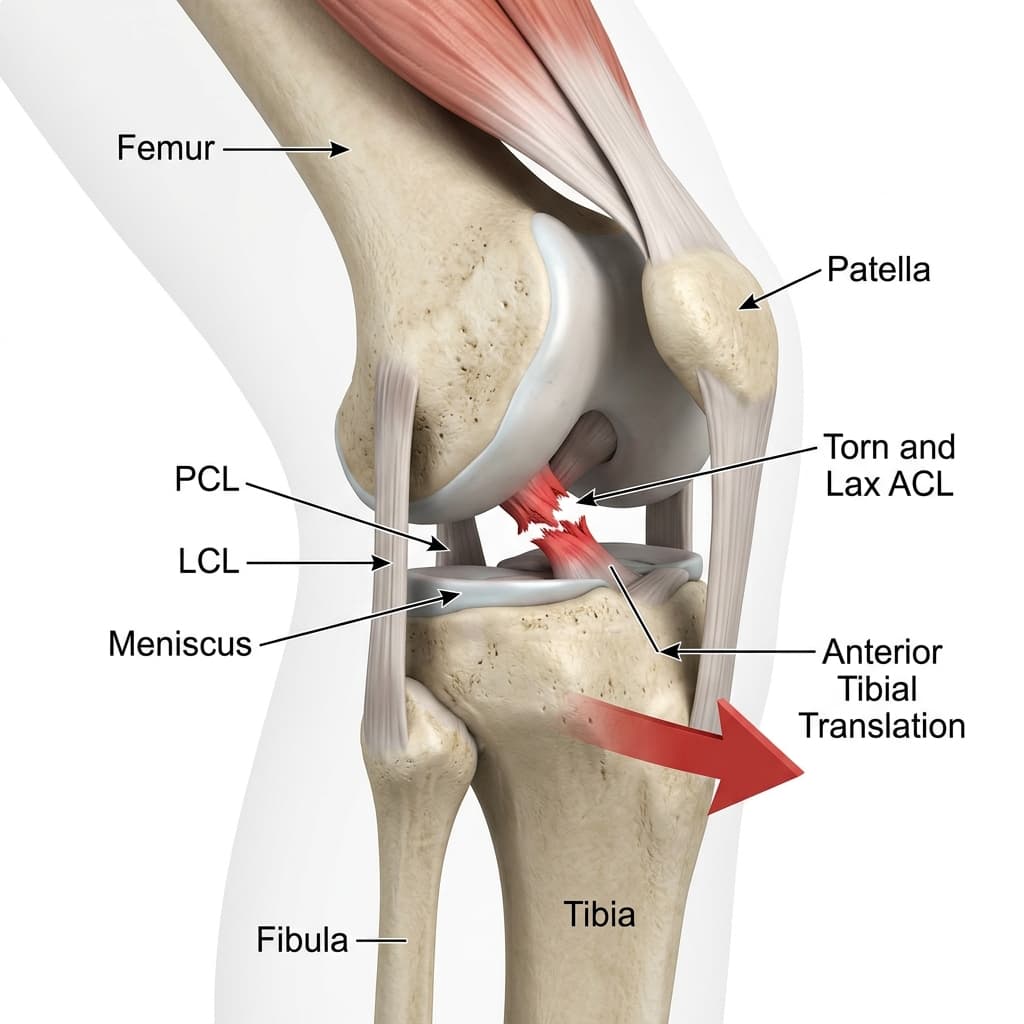
Understanding structural differences caused by knee instability.
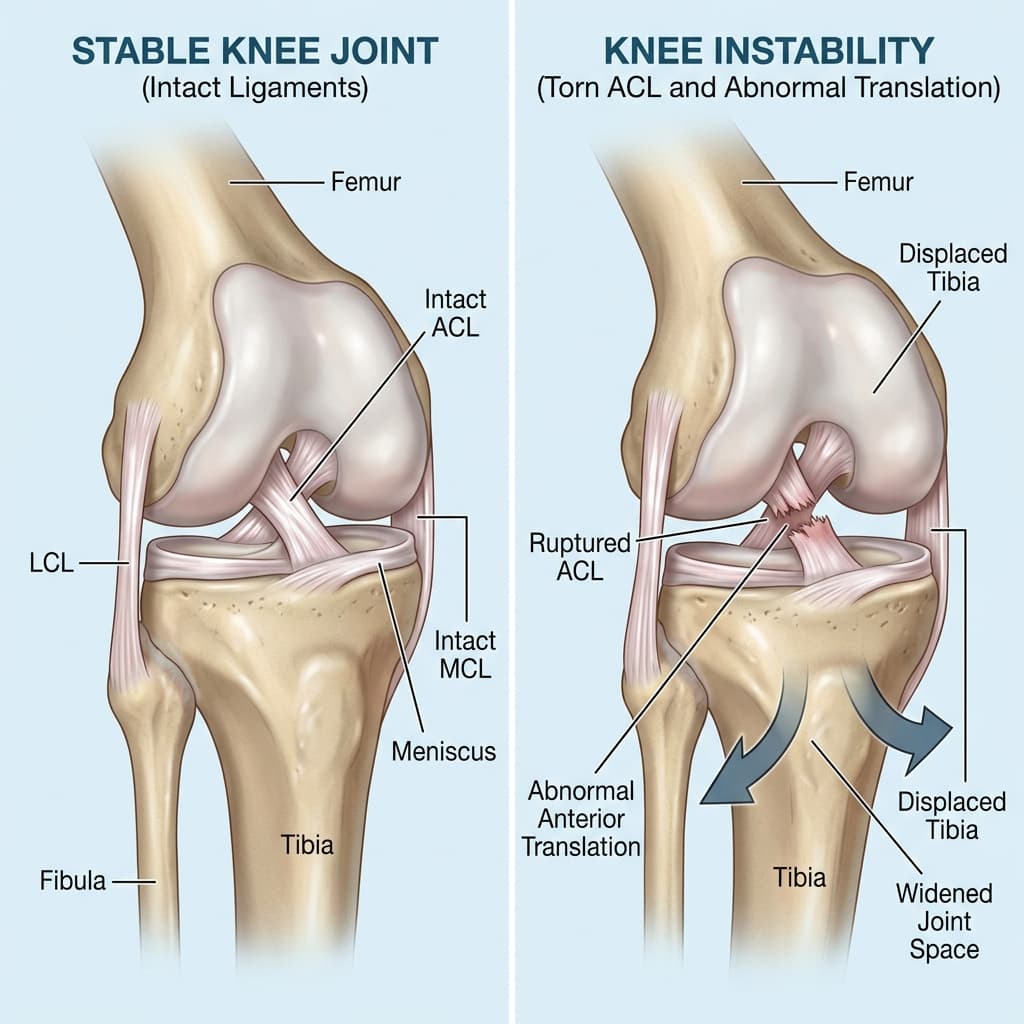 Comparison DiagramClinical Reference
Normal Anatomy
Taut, robust ligaments holding bones in correct alignment
Pathological / Affected Anatomy
Elongated, lax, or torn ligaments causing abnormal joint movement
Normal Anatomy
Stable joint during twisting, pivoting, or weight-bearing
Pathological / Affected Anatomy
Joint giving way or sliding out of place under load
| Anatomical Feature | Normal Anatomy | Pathological / Affected Anatomy |
|---|---|---|
| Ligament Tension | Taut, robust ligaments holding bones in correct alignment | Elongated, lax, or torn ligaments causing abnormal joint movement |
| Translation | Stable joint during twisting, pivoting, or weight-bearing | Joint giving way or sliding out of place under load |
Annotated MRI example pending clinical approval
MRI · Sagittal / Coronal MRI
Awaiting consultant-supplied anonymised imaging
Symptoms vary, and similar symptoms can occur with other knee conditions. Commonly reported signs include:
The development or onset of this condition can be associated with several mechanical, biological, and lifestyle factors, including:
A comprehensive clinical assessment is performed to understand the root cause of your symptoms and outline appropriate management options.
Imaging and other investigations may be recommended depending on clinical presentation. Common assessments include:
Indicated where clinically appropriate following assessment.
Indicated where clinically appropriate following assessment.
Indicated where clinically appropriate following assessment.
Medical illustration pending clinical review
We offer structured, staged treatment pathways, focusing on conservative and non-surgical approaches. Suitability depends on individual assessment.
Indicated where clinically appropriate.
Explore Treatment >Indicated where clinically appropriate.
Explore Treatment >Indicated where clinically appropriate.
Explore Treatment >Surgical intervention may be discussed when non-operative treatments do not provide sufficient relief, symptoms significantly restrict daily function or quality of life, and clinical and imaging findings correlate.
e.g., ACL, MCL, or MPFL
Consultant orthopaedic procedure.
Decisions depend on a detailed diagnosis, symptom severity, patient goals, activity expectations, and general health history. We support shared decision-making, ensuring you fully understand the expected benefits, risks, and alternatives of each pathway.
A consultation can help clarify the cause of your symptoms and discuss appropriate treatment options.
Face-to-face appointments are arranged through the reception team at the chosen clinic. Video consultations use Google Calendar where available.
Treatment pathways range from physiotherapy and bracing to injections or surgical procedures, tailored to your symptoms, diagnosis, and physical goals.
Get notified about new content on Knee Instability
We'll only email you about updates on this specific topic — unsubscribe anytime.
This website provides educational and general information about knee symptoms, conditions, and treatments. The content is for informational purposes only and does not constitute medical advice, diagnosis, or a treatment plan. It should not be used as a substitute for a professional consultation, examination, or clinical decision-making by a qualified orthopaedic specialist.
If you are experiencing symptoms or are concerned about a knee problem, please arrange a clinical consultation. If you have urgent symptoms, severe pain, or are unable to put weight on your leg, please read our urgent advice guidance or contact emergency services immediately (dial 999 or NHS 111).