
Platelet-Rich Plasma (PRP)
A biological injection prepared from the patient's own blood, designed to support joint health in selected cases.
On this page
What is a Platelet-Rich Plasma (PRP)?
Platelet-Rich Plasma (PRP) therapy is a biological treatment that utilizes components of the patient's own blood. A sample of blood is drawn and processed in a centrifuge to separate and concentrate the platelets, which are rich in growth factors and signaling proteins. This concentrated plasma is then injected directly into the knee joint or surrounding tendon structures.
Platelet-Rich Plasma (PRP) Explanation
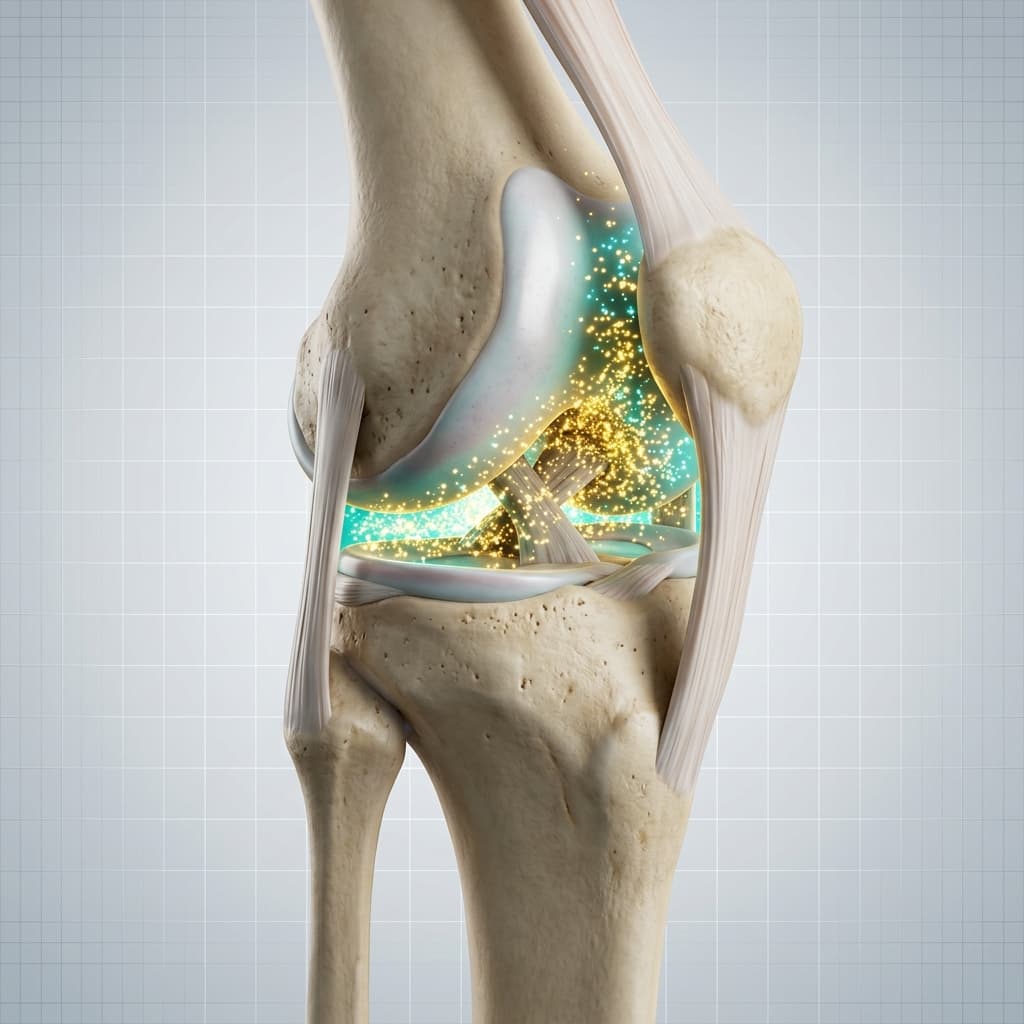 AnatomyClinical Approved
Platelet-Rich Plasma (PRP) Injection Target
Concentrated platelets and growth factors targeted to the intra-articular space.
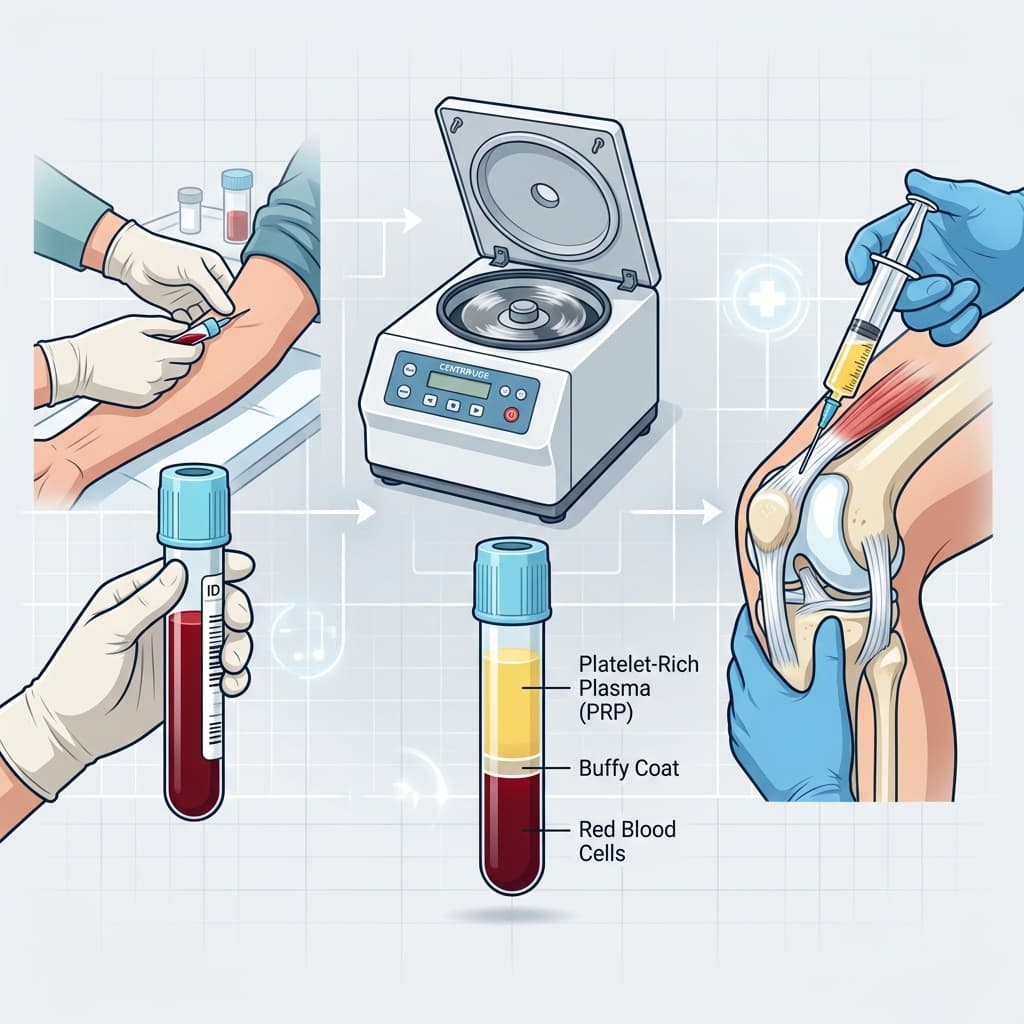 Needle PathClinical Approved
Platelet-Rich Plasma (PRP) Needle Access Path
Infographic of the PRP preparation process and targeted joint delivery.
This outpatient procedure is conducted under strict sterile conditions:
We highly recommend executing injections under real-time ultrasound guidance to ensure precise placement within the joint space, maximizing therapeutic safety and efficacy.
Clinical Characteristics Summary
How does it work?
PRP aims to deliver a high concentration of platelets to the affected area. Platelets contain biological molecules that play a role in natural cell signaling and tissue responses. In degenerative joints or tendon issues, this concentration is intended to modulate the local environment. Clinical evidence for PRP continues to evolve, and its use is considered for select patients.
Who is this suitable for?
Patients Who May Be Considered
- Selected patients with chronic knee tendinopathies (such as patellar tendinopathy) who have not responded to active physical therapy.
- Individuals with early-to-moderate knee osteoarthritis looking for biological treatment options.
- Patients who prefer an autologous option (using their own blood components) over synthetic alternatives.
- Selected cases where traditional measures have not provided sufficient symptom management.
Who May Not Be Suitable
- Active infection at the injection site or systemic blood infections.
- Underlying haematological disorders, low platelet counts, or severe anaemia.
- Patients taking anticoagulant medications where a blood draw or joint injection carries increased bleeding risk.
- Advanced, severe bone-on-bone knee arthritis (where structural restoration is required).
Potential Benefits & Risks
Potential Benefits
- Uses the patient's own blood components, minimizing risk of allergic reaction to synthetic substances.
- Delivers concentrated growth factors directly to the targeted joint or tendon tissue.
- May assist in managing discomfort and supporting joint function in selected patients.
- Provides an autologous option for conservative clinical management.
Risks & Limitations
- Clinical evidence is still developing, and individual responses to PRP therapy vary significantly.
- There is no clinical guarantee that PRP will heal damaged tissues or restore worn cartilage.
- Requires a blood draw, which carries standard minor risks like bruising or localized soreness.
- Potential for temporary post-injection pain, stiffness, or localized swelling.
- Standard minor risks associated with any joint injection, including infection.
What happens during the procedure?
Knee injections are outpatient procedures completed in our sterile clinical rooms. The step-by-step process is detailed in the interactive guide above, including:
After the injection
Aftercare is focused on protecting the joint and monitoring for rare complications. Guidelines are outlined in the interactive tabs above. Remember to rest the joint for the first 48 hours and avoid unaccustomed heavy loads.
Frequently Asked Questions
Which injection may be appropriate?
Choosing an injection therapy requires an individualized clinical assessment. The choice depends upon several factors, including:
- Verified clinical diagnosis
- Type and severity of symptoms
- Diagnostic imaging findings (X-ray, MRI, Ultrasound)
- Patient activity levels and functional goals
- Previous conservative treatments attempted
- Individual medical history, medications, and allergies
- Potential clinical risks versus patient-specific benefits
- Available non-injection treatment alternatives
⚠️ Only an individual consultation with our consultant orthopaedic surgeon can determine whether a knee injection is clinically appropriate for your condition.
Schedule a Clinical Consultation
To evaluate your knee symptoms and discuss whether an injection therapy is indicated, arrange a specialist consultation.
- NICE guidelines on PRP for osteoarthritis and tendinopathies (highlighting safety and efficacy review).
- Consensus statements on orthobiologics in sports medicine.
- Clinical literature on processing protocols and clinical trials of PRP in knee pathology.
- A Systematic Review of Current Clinical Practice Guidelines on Intra ... (pmc.ncbi.nlm.nih.gov)
- Platelet-rich plasma injections for knee osteoarthritis (nice.org.uk)
- Choosing between platelet-rich plasma (PRP) and hyaluronic acid ... (sciencedirect.com)
- Platelet-Rich Plasma (PRP) for Knee Osteoarthritis Technology Overview (aaos.org)
- HTG497 Platelet-rich plasma injections for knee osteoarthritis (nice.org.uk)
Get notified about new content on Platelet-Rich Plasma (PRP)
We'll only email you about updates on this specific topic — unsubscribe anytime.
Medical Disclaimer
This website provides educational and general information about knee symptoms, conditions, and treatments. The content is for informational purposes only and does not constitute medical advice, diagnosis, or a treatment plan. It should not be used as a substitute for a professional consultation, examination, or clinical decision-making by a qualified orthopaedic specialist.
If you are experiencing symptoms or are concerned about a knee problem, please arrange a clinical consultation. If you have urgent symptoms, severe pain, or are unable to put weight on your leg, please read our urgent advice guidance or contact emergency services immediately (dial 999 or NHS 111).