
Corticosteroid Injection
A localized anti-inflammatory injection designed to offer temporary relief from acute pain and swelling in select patients.
On this page
What is a Corticosteroid Injection?
A corticosteroid injection (often called a 'steroid' or 'cortisone' injection) involves administering a strong anti-inflammatory medication directly into the knee joint. The primary objective is to manage active inflammation, helping to reduce pain and swelling in patients with conditions like knee osteoarthritis, gout, or acute joint flares.
Corticosteroid Injection Explanation
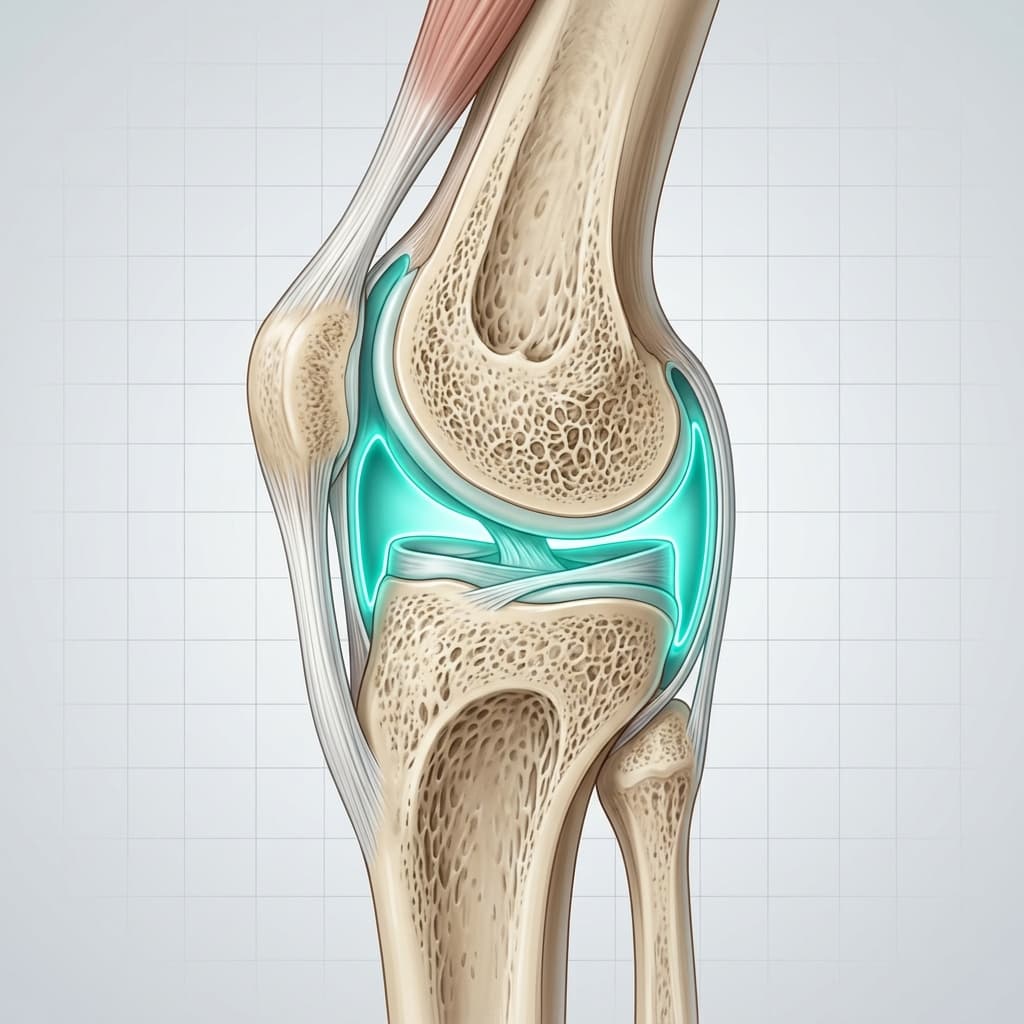 AnatomyClinical Approved
Corticosteroid Injection Target
Clinical illustration of knee joint showing intra-articular target space.
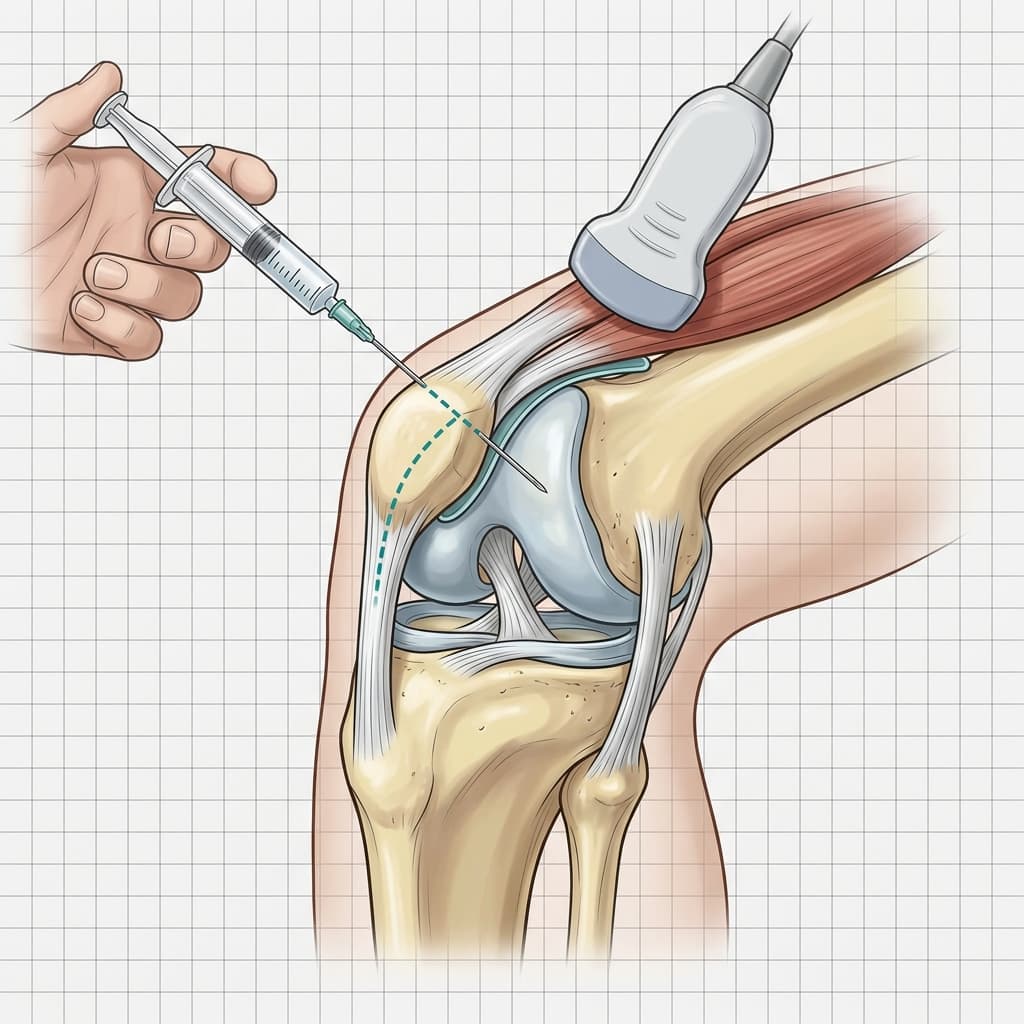 Needle PathClinical Approved
Corticosteroid Needle Access Path
Needle trajectory for superolateral approach into the suprapatellar recess.
This outpatient procedure is conducted under strict sterile conditions:
We highly recommend executing injections under real-time ultrasound guidance to ensure precise placement within the joint space, maximizing therapeutic safety and efficacy.
Clinical Characteristics Summary
How does it work?
Corticosteroids mimic the actions of natural hormones produced by the adrenal glands to suppress inflammatory pathways. By dampening the local immune response within the knee joint, they help reduce tissue swelling, joint effusion (fluid buildup), and nerve irritation. This localized approach is selected to target symptoms directly within the knee.
Who is this suitable for?
Patients Who May Be Considered
- Patients experiencing acute pain and swelling due to inflammatory knee arthritis.
- Individuals with severe joint flares where pain restricts basic mobilization.
- Those who have not obtained sufficient symptom control from conservative measures like activity modification.
- Patients requiring temporary, localized symptom reduction to facilitate active rehabilitation or physiotherapy.
Who May Not Be Suitable
- Active or suspected infection within or around the knee joint.
- Systemic infections or uncontrolled diabetes mellitus (as steroids can elevate blood glucose levels).
- History of hypersensitivity or allergic reaction to corticosteroids or local anaesthetic.
- Severe joint destruction or instability where surgical intervention is the appropriate pathway.
Potential Benefits & Risks
Potential Benefits
- Potential reduction in severe inflammation and joint swelling.
- Temporary relief from acute knee pain in select patients.
- Possible improvement in joint range of motion and comfort during daily activities.
- May help patients engage more comfortably in active physical therapy programs.
Risks & Limitations
- Symptom relief is temporary and the duration of effect varies significantly between individuals.
- Repeated injections are generally not recommended due to potential risks of cartilage degeneration and tendon weakening.
- Small risk of localized joint infection (septic arthritis), which requires immediate medical attention.
- Possible temporary increase in joint pain ('steroid flare') lasting 24 to 48 hours post-injection.
- Potential for temporary skin changes, fat atrophy, or depigmentation at the injection site.
What happens during the procedure?
Knee injections are outpatient procedures completed in our sterile clinical rooms. The step-by-step process is detailed in the interactive guide above, including:
After the injection
Aftercare is focused on protecting the joint and monitoring for rare complications. Guidelines are outlined in the interactive tabs above. Remember to rest the joint for the first 48 hours and avoid unaccustomed heavy loads.
Frequently Asked Questions
Which injection may be appropriate?
Choosing an injection therapy requires an individualized clinical assessment. The choice depends upon several factors, including:
- Verified clinical diagnosis
- Type and severity of symptoms
- Diagnostic imaging findings (X-ray, MRI, Ultrasound)
- Patient activity levels and functional goals
- Previous conservative treatments attempted
- Individual medical history, medications, and allergies
- Potential clinical risks versus patient-specific benefits
- Available non-injection treatment alternatives
⚠️ Only an individual consultation with our consultant orthopaedic surgeon can determine whether a knee injection is clinically appropriate for your condition.
Schedule a Clinical Consultation
To evaluate your knee symptoms and discuss whether an injection therapy is indicated, arrange a specialist consultation.
- National Institute for Health and Care Excellence (NICE) Guidelines on Osteoarthritis: care and management.
- Royal College of Radiologists / Royal College of General Practitioners guidance on joint injections.
- Peer-reviewed clinical literature on the efficacy and safety of intra-articular corticosteroid injections.
- Expert consensus on glucocorticoids injection for knee osteoarthritis - PMC (pmc.ncbi.nlm.nih.gov)
- Use and safety of corticosteroid injections in joints and ... (rapm.bmj.com)
- AAC-Intra-articular-Injections-for-Knee-OA-Updated-August-2020. ... (coa-aco.org)
- Efficacy of intra-articular corticosteroid injections in knee ... (sciencedirect.com)
- A Systematic Review of Current Clinical Practice Guidelines on Intra ... (journals.sagepub.com)
Get notified about new content on Corticosteroid Injection
We'll only email you about updates on this specific topic — unsubscribe anytime.
Medical Disclaimer
This website provides educational and general information about knee symptoms, conditions, and treatments. The content is for informational purposes only and does not constitute medical advice, diagnosis, or a treatment plan. It should not be used as a substitute for a professional consultation, examination, or clinical decision-making by a qualified orthopaedic specialist.
If you are experiencing symptoms or are concerned about a knee problem, please arrange a clinical consultation. If you have urgent symptoms, severe pain, or are unable to put weight on your leg, please read our urgent advice guidance or contact emergency services immediately (dial 999 or NHS 111).