Lincolnshire Knee Clinic
Treatments

Revision Knee Replacement

Surgical replacement of a worn, loose, or infected previous knee replacement implant.

On this page

Overview

Revision knee replacement is a specialized procedure to replace a previous implant. This page covers indications, complexity, and recovery.

Revision knee replacement is a complex surgical procedure where some or all of the parts of a previous artificial knee joint are removed and replaced with new, specialized revision implants. This is performed due to implant wear, loosening, instability, fracture, or chronic infection. Wording is cautious: revision surgery is more complex than primary replacement.
This information is for general patient education and does not replace an individual clinical assessment. Suitability and outcomes depend on joint condition and physical health.

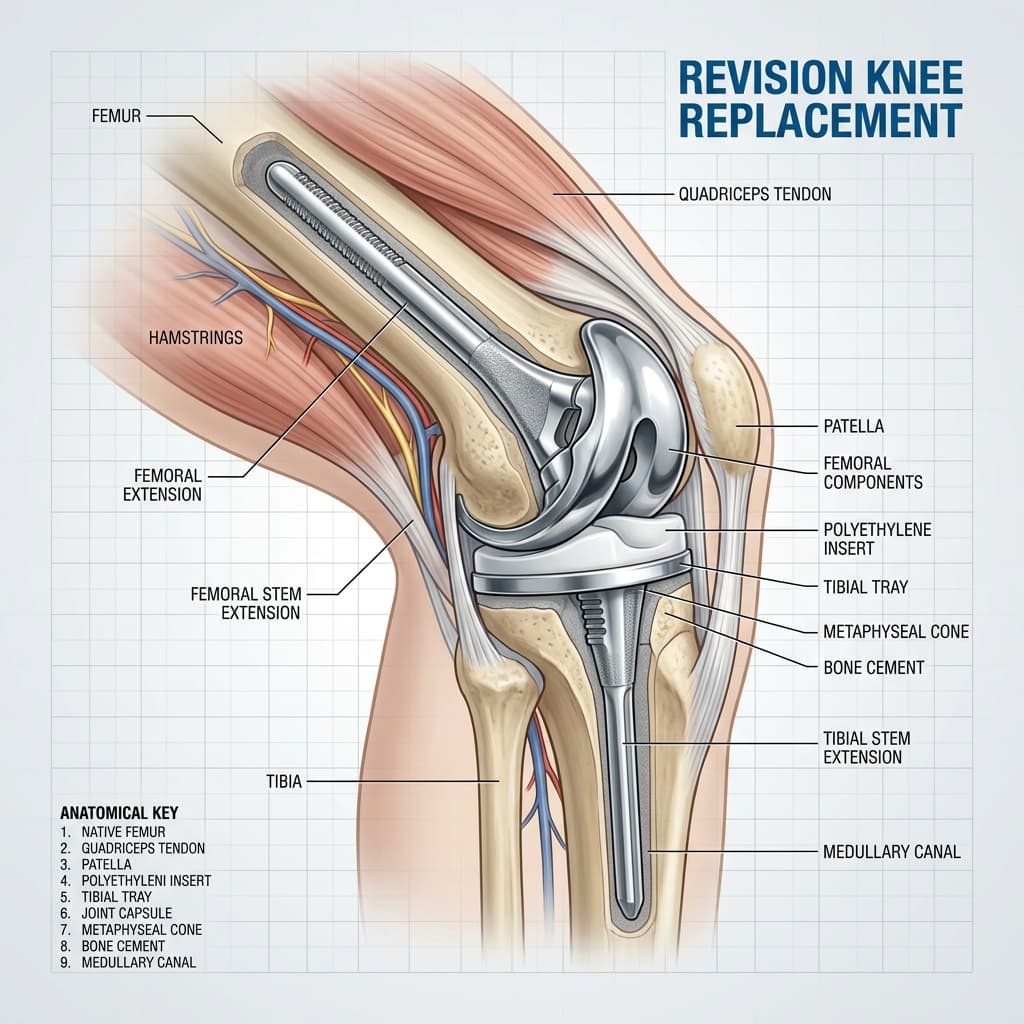
Clinical Overview Illustration

Clinical illustration for revision knee replacement
Overview of revision knee replacement..

What does this treatment involve?

Typical clinical stages of this treatment pathway include:

1Comprehensive pre-op planning, infection screening, and imaging
2Making an incision (often through the previous scar) and exposing the joint
3Carefully removing the old metal and plastic components from the bone
4Preparing the remaining bone surfaces, which may require bone grafts or metal augments
5Inserting and cementing specialized, longer-stemmed revision implants
6Checking stability, alignment, and range of movement
7Closing the incision and applying compression dressings

Suitability

Suitability depends entirely on an individual clinical examination, diagnostic imaging, medical history, and personal activity goals.

Who may benefit?

  • Patients with aseptic loosening (implants coming loose from the bone)
  • Individuals with chronic prosthetic joint infection failing non-surgical treatment
  • Patients with significant joint instability or periprosthetic fractures

When might it not be suitable?

  • Unexplained knee pain where the primary implant is structurally sound and stable
  • Patients with severe medical conditions making major, prolonged surgery unsafe

Alternatives

Alternative treatment pathways that may be considered depending on clinical severity:

Non-surgical symptom management (medication, brace support)Explore Option >
Long-term suppressive antibiotic therapy (for infected joints in unfit patients)Explore Option >

Risks

As with any clinical intervention, risks and complications differ between patients. Suitability and risk profiles are discussed in detail during consultation. General risks associated with this procedure include:

Higher risk of infection or recurrence of infection
Higher risk of implant loosening or failure compared to primary replacement
Loss of bone stock or fracture of the surrounding bones during surgery
Persistent stiffness, pain, or leg length discrepancies

Recovery & Rehabilitation

Post-treatment rehabilitation and timelines are key to restoring joint health. We do not provide guaranteed recovery times.

Immediate Recovery

  • Mobilisation begins quickly, but weight-bearing restrictions may apply depending on bone quality
  • Hospital stay is typically 3 to 5 days
  • Rehabilitation is longer and more gradual than primary replacement, typically 6-12 months

Rehabilitation Pathway

  • Intensive physiotherapy to restore range of movement and rebuild leg strength
  • Close monitoring of wound healing and infection parameters
Rehabilitation Milestones

Revision Knee Replacement Recovery Timeline

Typical phase-based progression and return to functional activity guidelines.

1
Phase 1 (Weeks 1-2)
Initial Mobility & Healing
Primary Focus:Control swelling, achieve full extension, activate key stabilizing muscles.
  • Use crutches or support frame for safety
  • Perform gentle range of motion exercises (0-90° flexion)
  • Regular elevation and icing to manage inflammatory response
Weight BearingWeight-bearing as tolerated with aids
Driving StatusNot permitted
2
Phase 2 (Weeks 3-6)
Gait Normalisation & Range
Primary Focus:Restore normal walking gait, progress knee bending beyond 90°, and increase standing load.
  • Gradually wean off walking aids as gait stabilizes
  • Introduce closed-chain exercises (squats, calf raises)
  • Increase active movement and daily walking distances
Weight BearingFull weight-bearing
Driving StatusPermitted once emergency stop is safe (approx. 6 weeks)
3
Phase 3 (Weeks 6-12+)
Strengthening & Functional Return
Primary Focus:Restore leg strength, balance, and return to light work/recreation.
  • Progress resistance training (leg press, cycling)
  • Incorporate balance and coordination drills
  • Gradual return to work, driving, and low-impact activity
Weight BearingUnrestricted
Driving StatusPermitted
Important Clinical AdviceRecovery timelines are indicative. Individual rehabilitation progression depends on surgical findings, tissue quality, and the specific guidance of your consultant orthopaedic surgeon and physiotherapist.

Surgical Recovery Resources

As this is a surgical procedure, you may find our recovery resources helpful. These explain how to prepare and what to expect:

Clinical Pathway Map

Staged treatment and recovery journey.

Anatomy Comparison

Management Strategy Comparison

Comparing conservative treatment with active intervention options.

Conservative Path
Conservative PathConservative PathClinical Reference
Interventional Path (Intervention Options)
Interventional PathInterventional PathClinical Reference
Primary Focus

Conservative Path

Symptom management, quad strength, offloading

Interventional Path

Structural correction, joint resurfacing or repair

Timeframe

Conservative Path

Gradual ongoing adaptation over 3-6 months

Interventional Path

Structured acute healing followed by targeted rehab

Expected Outcome

Conservative Path

Improved function and pain control, preserved anatomy

Interventional Path

Restored mechanical stability, reconstructed tissue

Frequently Asked Questions

Common reasons include mechanical wear of the plastic spacer, loosening of the metal parts from the bone over time, joint instability, or chronic low-grade infection.
It is a highly specialized procedure that requires careful planning, custom implants, and a skilled surgeon, as there is often less bone stock to work with than in a primary surgery.
Awaiting Clinical Review

This page is in draft and has not yet been formally reviewed by our clinical team. Content may change following clinical review.

References
  1. NHS — Knee replacement: Risks
  2. Worcestershire Acute Hospitals NHS Trust

Would you like to discuss your treatment options?

A consultation can help clarify the cause of your symptoms and discuss appropriate treatment options.

Face-to-face appointments are arranged through the reception team at the chosen clinic. Video consultations use Google Calendar where available.

Continue Your Knee Journey

Next Step: Recovery & Rehabilitation

Understand recovery milestones, physical therapy timelines, and guidelines for returning to daily activities, driving, work, or sports safely.

Explore Recovery

Get notified about new content on Revision Knee Replacement

We'll only email you about updates on this specific topic — unsubscribe anytime.

Medical Disclaimer

This website provides educational and general information about knee symptoms, conditions, and treatments. The content is for informational purposes only and does not constitute medical advice, diagnosis, or a treatment plan. It should not be used as a substitute for a professional consultation, examination, or clinical decision-making by a qualified orthopaedic specialist.

If you are experiencing symptoms or are concerned about a knee problem, please arrange a clinical consultation. If you have urgent symptoms, severe pain, or are unable to put weight on your leg, please read our urgent advice guidance or contact emergency services immediately (dial 999 or NHS 111).

Contact us on WhatsApp — for administrative enquiries only. Please do not send confidential medical information.