Key Takeaways
- Knee clicking and popping (crepitus) is very common and usually harmless if not accompanied by pain or swelling.
- Harmless clicks are often caused by gas bubbles bursting in the joint fluid (cavitation) or tendons snapping over bony parts.
- Clicking accompanied by pain, swelling, or catching can be a sign of a meniscus tear, cartilage damage, or knee arthritis.
- If your knee physically locks or gets stuck, you should seek a professional orthopaedic assessment promptly.
- Strengthening the muscles around your knee helps stabilize the joint, improve tracking, and often reduces joint noises.
Introduction to Joint Noise (Crepitus)
It is a common scenario: you bend down to pick something up, squat at the gym, or walk upstairs, and you hear a distinct click, pop, or crunch from your knees. This joint noise is medically referred to as crepitus. For many people, these sounds can cause anxiety, leading them to worry that their joints are wearing out or that they are developing early-stage arthritis.
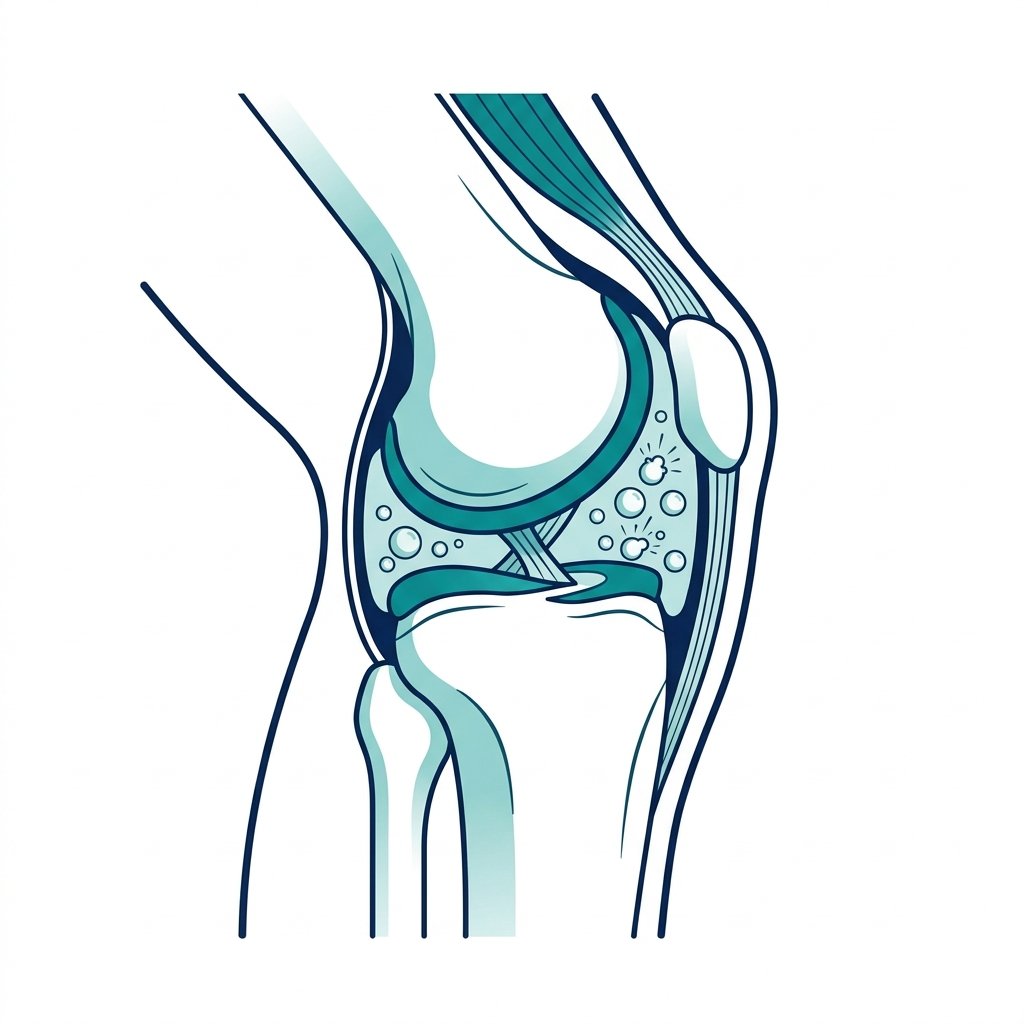
However, the presence of knee noises alone is rarely a cause for concern. To understand why your knees make these sounds, it helps to look at the anatomy of the knee joint. The knee is a complex hinge joint where the femur (thighbone), tibia (shinbone), and patella (kneecap) meet. These bones are cushioned by articular cartilage and surrounded by a joint capsule filled with synovial fluid. During movement, pressure changes and structural gliding can easily create various sounds.
"Painless joint clicking and popping is a normal physiological occurrence. It does not indicate structural joint wear, nor is it a predictor of future osteoarthritis."
Why Painless Clicking and Popping Happens
In the vast majority of cases, knee noises are entirely painless and harmless. There are two primary physiological explanations for painless crepitus:
- •Cavitation (Gas Bubble Release): The knee joint is bathed in synovial fluid, which acts as a lubricant. This fluid contains dissolved gases like carbon dioxide, nitrogen, and oxygen. When you bend or stretch your knee, you alter the volume and pressure within the joint capsule. This sudden drop in pressure causes these dissolved gases to form tiny micro-bubbles, which then rapidly collapse. This collapse produces the classic popping sound, similar to cracking your knuckles. It is a completely normal physical process and causes no damage to the joint.
- •Snapping Tendons and Ligaments: The muscles that support your knee are attached to bones via tough cords called tendons. As your knee joint goes through its range of motion, these tendons and ligaments can slide over bony prominences (such as the femoral condyles or the edge of the tibia). If a tendon shifts slightly out of its usual pathway and then snaps back into place, it can create a clicking or popping sound. This is common when starting to move after sitting for long periods, or in individuals with tight muscles.
Warning Signs: When Clicking Indicates a Problem
While painless clicking is harmless, joint noises accompanied by other clinical symptoms are warning signs that should not be overlooked. In these cases, the sound is usually a sign of structural friction or mechanical dysfunction within the knee joint.
You should seek a professional clinical assessment if your knee noises are accompanied by:
- •Pain: A dull ache, throbbing, or sharp pain occurring during or immediately after the joint clicks.
- •Swelling (Effusion): Visible puffiness or tightness around the joint, indicating fluid accumulation due to irritation.
- •Catching or Locking: A mechanical sensation where the knee momentarily stalls, catches, or physically gets stuck in a bent or straight position and cannot be moved.
- •Instability (Giving Way): A feeling that the knee is weak, buckling, or cannot support your weight, which can lead to falls.
These accompanying symptoms are key diagnostic clues suggesting that the noise is not just gas bubbles or tendons snapping, but is instead related to structural pathology within the joint.
Common Structural Causes of Symptomatic Crepitus
When knee clicking or popping is painful or mechanical, it is usually caused by one of the following underlying conditions:
- •Meniscal Tears: The menisci are two C-shaped cartilage shock absorbers sitting between your femur and tibia. If the meniscus is torn—often due to a twisting injury or age-related degeneration—a loose flap of tissue can catch within the moving joint mechanism. This creates a clicking sensation and sharp pain as the femur rolls over the torn fragment.
- •Chondromalacia Patellae: This condition involves the softening and degeneration of the smooth cartilage lining the underside of the kneecap. It is common in runners and cyclists. As the rough, softened underside of the patella rubs against the femur, it produces a distinct grinding sensation (crepitus) along with a dull ache behind the kneecap.
- •Knee Osteoarthritis: In osteoarthritis, the protective articular cartilage wearing down exposes the underlying bone surfaces. When these rough bony surfaces rub directly against one another, it creates a loud grinding sound, stiffness, and chronic pain.
- •Loose Bodies: Small fragments of bone or cartilage can break off due to past trauma, severe arthritis, or conditions like osteochondritis dissecans (OCD). These fragments float freely in the joint space and can act like a wedge, causing sudden popping, catching, or physical locking of the knee.
Non-Surgical Preservation and Management
If you experience mild symptomatic clicking or wish to minimize joint noise, several evidence-based conservation strategies can help preserve your knee health:
- •Targeted Strengthening: Strengthening the muscles that support and align the knee—particularly the quadriceps (including the vastus medialis oblique or VMO) and gluteal muscles—improves kneecap tracking. When the patella tracks smoothly in its groove, friction and clicking are significantly reduced.
- •Low-Impact Exercise: Activities like cycling, swimming, and using an elliptical trainer stimulate the synovial membrane to produce lubricating joint fluid. This fluid cushions the cartilage and reduces grinding without subjecting the joint to heavy impact.
- •Weight Management: The knee joint bears several times your body weight with every step. Losing even a small amount of weight drastically reduces the mechanical stress and friction within the joint, relieving pain and slowing cartilage wear.
- •Professional Guidance: Working with a physiotherapist or consulting a specialist can help identify the exact mechanical cause of your symptoms and establish a safe, structured rehabilitation pathway.